
Inductive Heating Systems
Save up to 75% on energy costs – generate process heat efficiently using induction
Induction heating offers significant advantages in industrial applications: Heat is generated directly within the component — quickly, precisely, and with virtually no loss. This allows processes to be designed to be significantly more energy-efficient than with conventional heating methods such as steam, thermal oil, or heating cartridges. Short heating times, dynamic controllability, and uniform temperature distribution ensure maximum process reliability and consistently high quality.
Kendrion’s inductive heating systems enable process heating in the low-temperature range up to approx. 300 °C with an efficiency of up to 98% and a temperature accuracy of ±1 to 1.5 °C. This allows energy costs to be reduced by up to 75%, heat losses to be minimized, and production processes to be made more sustainable. At the same time, oil and steam systems are eliminated, significantly reducing maintenance requirements and system complexity.
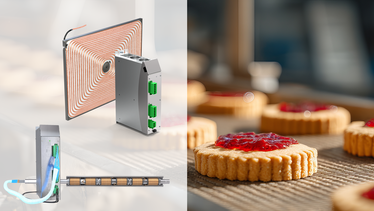
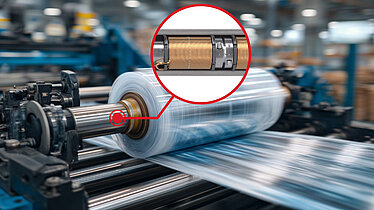
The systems are used, among other things, in the textile industry for coating, drying, and setting; in the food and beverage industry for baking, heating, and pasteurizing; and in the packaging industry for sealing, welding, and bonding. Inductive heating systems also impress in the plastics industry as well as in pharmaceutical and medical technology with their precise, clean, and efficient heating processes.
Inductive heating for low-temperature process heat
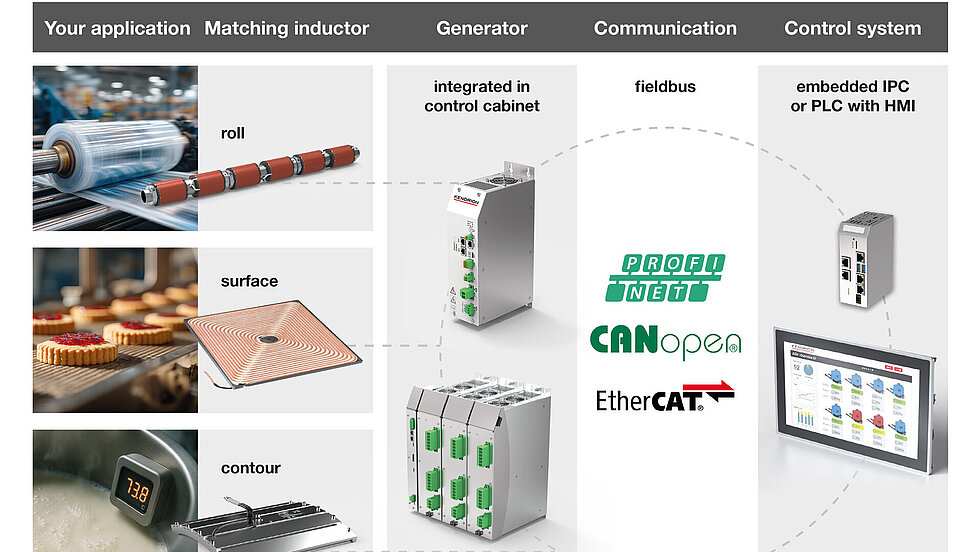
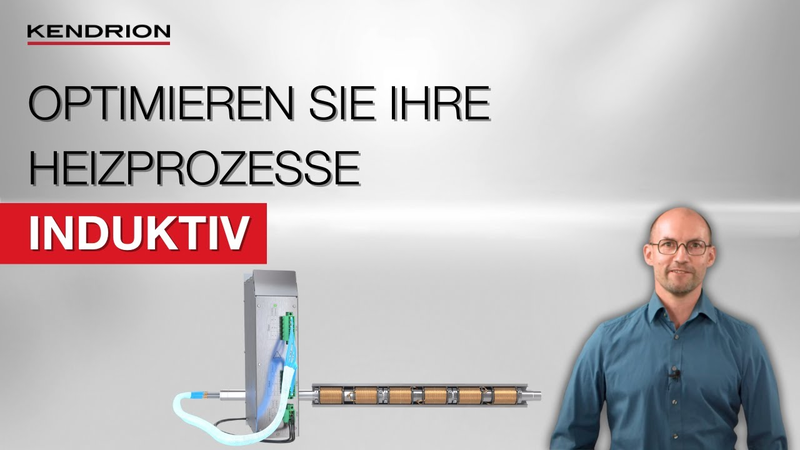
Whether you need a roller, surface or contour inductor, Kendrion provides the right induction solution for your application. We select the optimal induction generator to match your process requirements and, if desired, supply an embedded IPC or PLC with HMI for seamless integration into your production environment.
Watch the video!
From custom applications to the modular design of our inductive heating systems
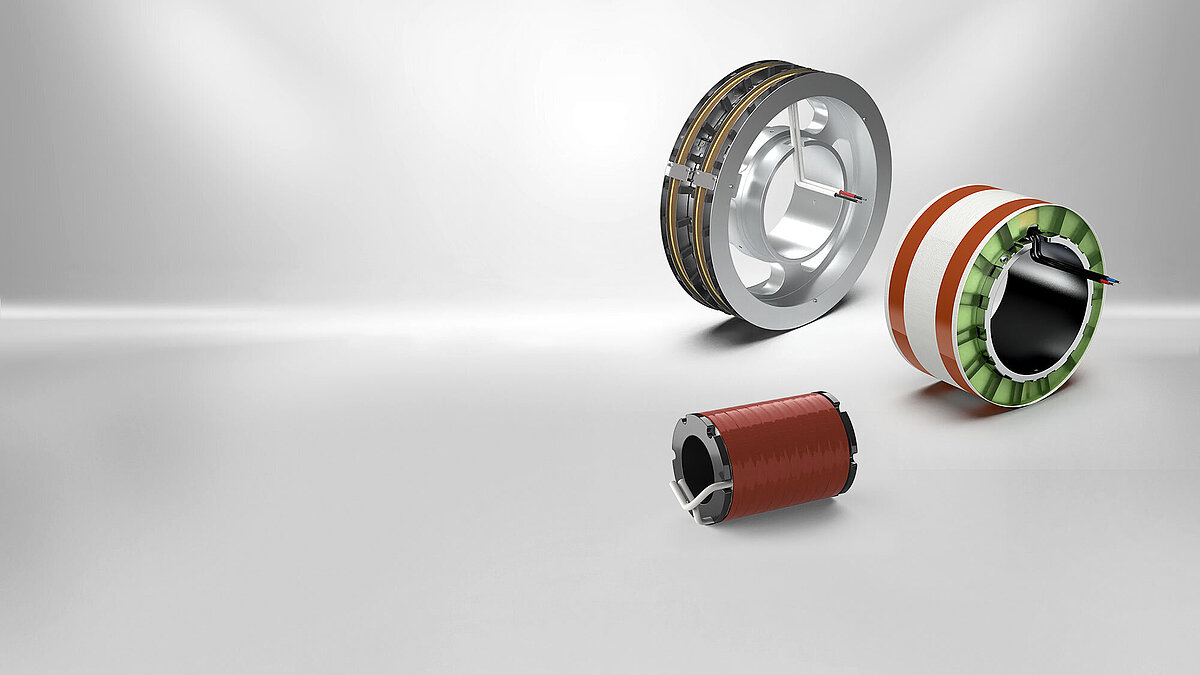
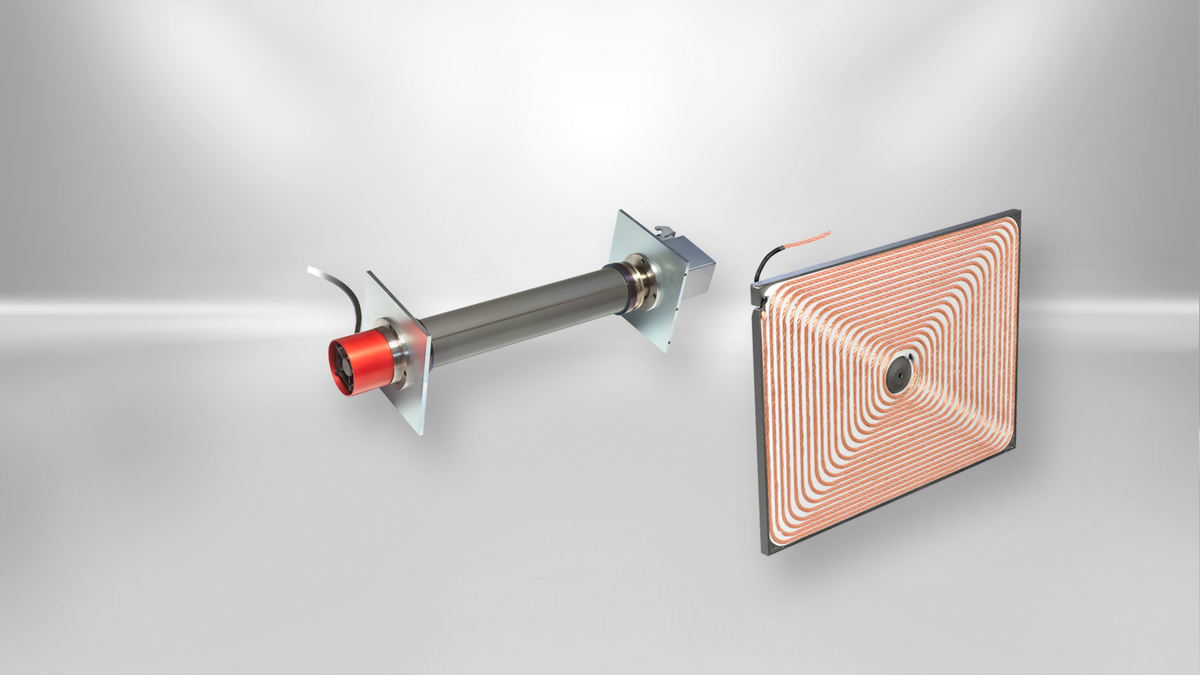
In Kendrion’s inductive heating systems, process heat is generated directly within the component using state-of-the-art inductors. Depending on the application, different inductor configurations — such as roller, surface, or contour heating — are used to deliver heat precisely, uniformly, and energy-efficiently.
The appropriate induction generators produce and control the high-frequency energy required for this and enable dynamic, precisely controllable heat output. Depending on power requirements, the systems can be flexibly integrated into control cabinets or expanded modularly. Via industrial fieldbus systems such as PROFINET, CANopen, or EtherCAT, as well as IPC- and PLC-based HMI controls, the heating systems can be seamlessly integrated into existing production environments and centrally monitored.
Induction Heating vs. Conventional Heating Technologies
Low-temperature process heat (up to approx. 300 °C)
| Kendrion Inductive Heating (for low temperature process heat) | Thermal Oil | Gas | Steam | Other Inductive Heating Systems (for high temperature process heat) | Conventional Electrical heaters | |
| Temperature accuracy | Very high (±1 – 1,5 °C) | Medium (±5–10 °C) | Medium (±5–15 °C) | Low (±10–20 °C) | High (±2–5 °C) | Medium (±3–10 °C) |
| Efficiency | Very high (98%) | Medium (60–80 %) | Medium (50–70 %) | Low-Medium (40–65 %) | Medium to high (75-90%) | Medium to high (70–85 %) |
| Heat-up time | Very fast | Slow | Medium | Slow | Very fast | Medium |
| Energy consumption | Low | High | High | High | Medium | Medium to high |
| Controllability | Fast, direct | Slow | Medium | Very slow | Fast | Medium |
| Heat loss | Very low | High | High | Very high | Low | Medium |
| CO₂ emissions | Very low | High | Very high | High | Low | Medium |
| Maintenance effort | Low | High (oil change) | High (burner) | High (pressure system) | Medium (water cooling needed) | Medium (lower life time) |
| Media requirements | - | Oil | Gas | Water/steam | - | - |




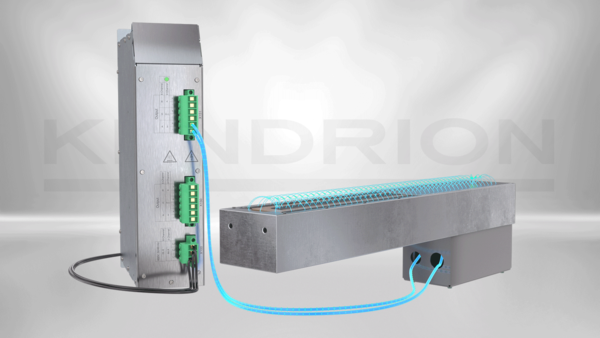
Inductive heating according to the eddy current principle
The Kendrion Inductive Heating Systems are based on the eddy current principle, in which a magnetic alternating field is generated with the help of high-frequency alternating current, which is introduced into the metal in a defined manner. The resulting eddy current losses generate a thermal power that can be precisely dosed by changing the current flow. Due to the exact controllability of the temperature, the heating process can be reproduced exactly, which ensures a high quality of the process. The temperature is measured directly in the jacket with up to four measuring points. In addition, uniform heating is achieved by a multi-zone design of the surface and roller inductor.
Kendrion offers energy-optimised induction heating systems whose components are precisely matched to each other.
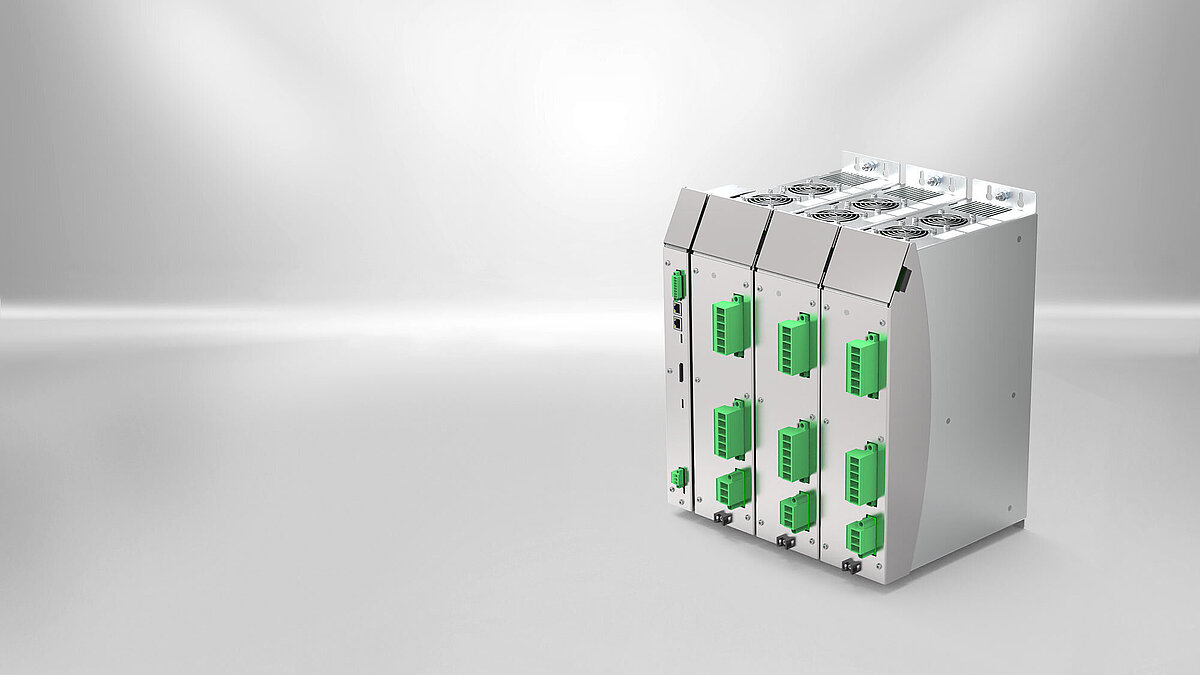
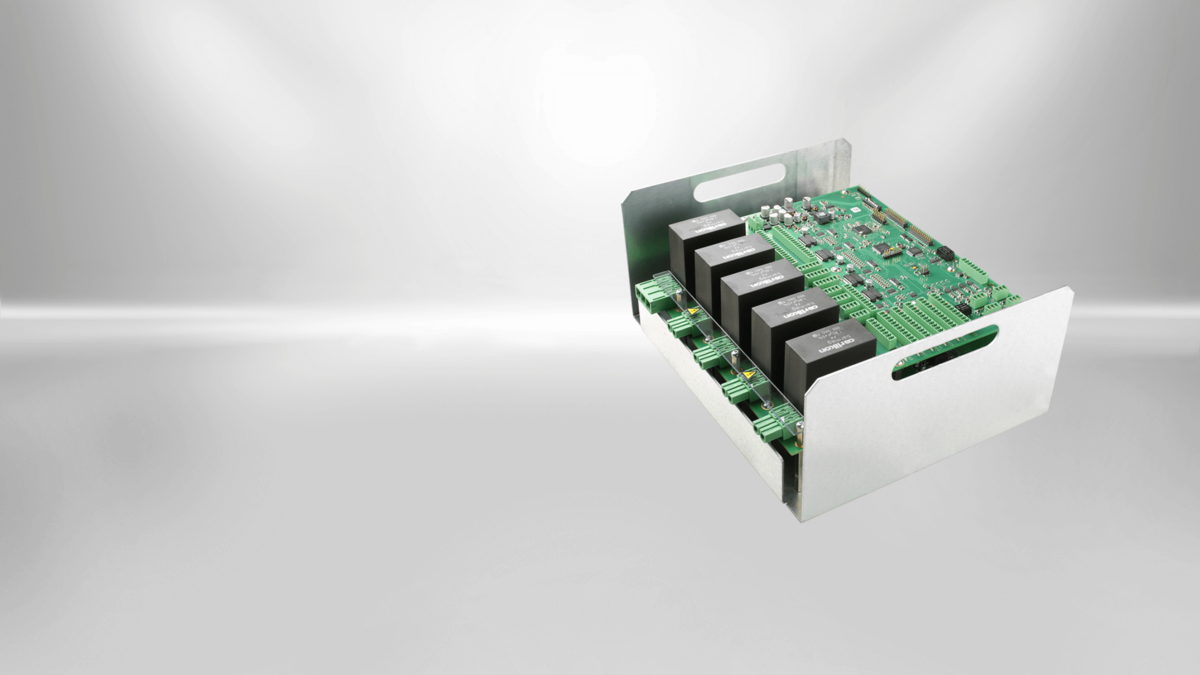
The Kendrion induction generators are designed as a modular system. They consist of a controller and up to 7 stackable induction generators. The controller can be integrated into the control of a machine via a fieldbus interface (e.g. PROFINET®). The control of the individual induction generators and the retrieval of status messages is carried out for all connected generators via the central controller. Depending on the configuration, the controller can also control the heating channels with integrated PID controllers. The units are designed for installation in control cabinets.



We support you from technical feasibility to series production!
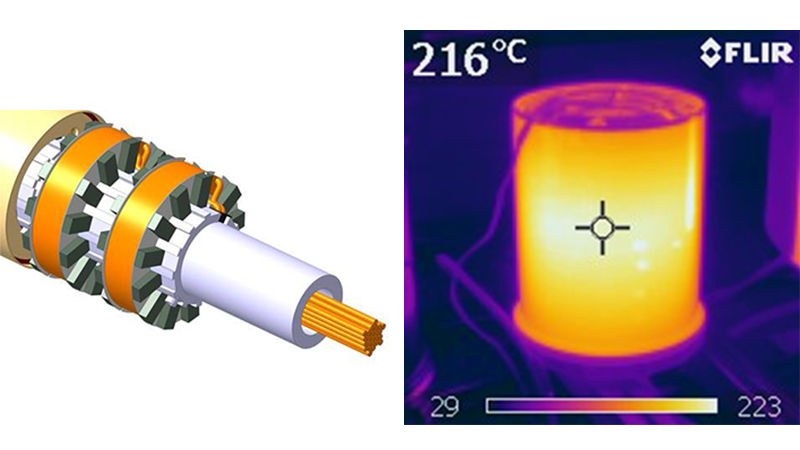
RIGHT: Thermographic image of an inductively heated roller (©Kendrion)
By transforming your processes or plants to induction heating concepts, you are a pioneer and a visionary. Not only does the heating process become more climate-friendly, but above all you achieve an increase in productivity and the quality of the end products.
With Kendrion, you have a partner at your side who not only specializes in the production of induction heaters, but also has extensive expertise in planning and design.
What services does Kendrion offer?
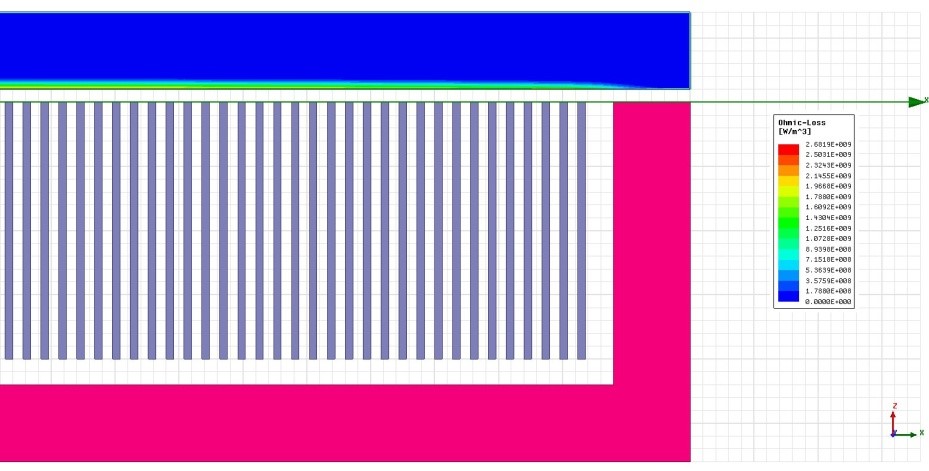
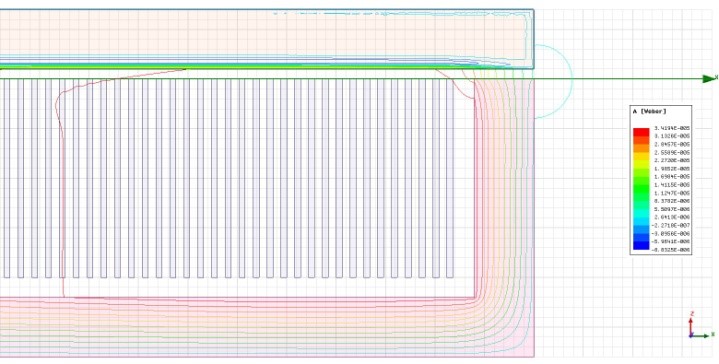
A core competence of Kendrion is numerical simulations of magnetic as well as fluid and thermodynamic processes. With our analysis tools, we can model even complex processes and design them with high precision. This enables us not only to evaluate the success of feasibility studies and preliminary developments, but also to produce concrete designs and samples as well as the final series product.
We are happy to provide support both in an advisory capacity and in the active solution of technical problems.
Our services include in detail:
Perform a joint process analysis
Set up functional specifications
Developing conceptual solutions
Creation of the design
Selection and adaptation of the induction generator
Development of the inductor
Realization of the series production
Why are Kendrion’s inductive heating systems an efficient alternative to oil, gas, or steam heating systems?
Why are Kendrion’s inductive heating systems an efficient alternative to oil, gas, or steam heating systems?
Kendrion’s inductive heating systems generate process heat directly within the component and do not require media such as oil, gas, or steam. This significantly reduces heat loss, energy consumption, and maintenance requirements.
In the low-temperature range up to approximately 300 °C, Kendrion's systems achieve a high temperature accuracy of approximately ±1 to 1.5 °C and an efficiency of up to 98%. This makes them particularly suitable for industrial processes where short heating times, precise control, high process reliability, and improved energy efficiency are critical.
How does induction heating work?
How does induction heating work?
In inductive heating, a coil carrying high-frequency alternating current generates an alternating magnetic field. This field induces eddy currents in the metal component. The resulting power loss is converted directly into heat within the component. This generates process heat quickly, precisely, and without direct contact with the heating element.
What are the advantages of inductive heating compared to the use of electric heating cartridges?
What are the advantages of inductive heating compared to the use of electric heating cartridges?
Induction heating generates heat directly within the metallic component instead of transferring it from an embedded heating element. This eliminates thermal resistance, air gaps and typical limitations associated with cartridge heaters.
Consequently, this results in shorter heating times, more precise temperature profiles, reduced maintenance requirements and greater process stability.
What are the advantages of induction heating compared to the use of gas heaters?
What are the advantages of induction heating compared to the use of gas heaters?
Induction heating generates heat directly within the component, eliminating the need for combustion, open flames or gas lines. This reduces energy losses, eliminates direct CO2 emissions, and allows for more precise control of heating processes. Concurrently, process reliability and cleanliness are enhanced, as no exhaust gases or combustion residues are produced.
By combining energy efficiency, emission reduction, precise control and enhanced safety, induction heating represents a future-ready alternative to gas heating systems in industrial applications.
What are the advantages offered by Kendrion inductive heating systems over traditional ones?
What are the advantages offered by Kendrion inductive heating systems over traditional ones?
Kendrion's inductive heating systems are particularly advantageous for industrial processes in the low-temperature range of up to approximately 300 °C that require precise, stable, and energy-efficient heating.
Unlike many other inductive systems, which are designed for high-temperature applications and often require additional cooling or maintenance, Kendrion systems are optimized for controlled process heat, direct controllability, and easy integration into production facilities.
This is especially important for processes such as drying, coating, fixing, sealing, bonding, and heating, where consistent quality is more important than maximum temperature.
How do I find the right inductive heating system for my application?
How do I find the right inductive heating system for my application?
The appropriate inductive heating system depends on the specific application, the component geometry, the required heating power, and the requirements for temperature control and process integration.
The Kendrion Product Finder, helps you select the right solutions, such as surface inductors, contour inductors, roller inductors, or induction generators.
Can inductive heating systems be integrated into existing production facilities?
Can inductive heating systems be integrated into existing production facilities?
Yes.
Inductive heating systems can be integrated into existing machine and plant designs. Depending on the system configuration, they can be connected to industrial control systems and communication interfaces, for example via fieldbus systems or PLC/HMI-based control solutions. This allows heating processes to be monitored, controlled, and integrated into higher-level production workflows.
